
멘토 특강 감상문
9주차 아트센터 나비 노소영 멘토님 특강 우수 감상문
측정되지 않는 것의 가치
—AI 시대, 아직 장부에 오르지 못한 나를 찾아서
지난 겨울 전공과목 종강 이후 교수님과의 식사자리였다. 교수님께서는 공인회계사 시험(CPA)에 합격한 선배들이 합격증만 지닌 채 회계법인에 입사하지 못하고 있다는 이야기를 하셨다. 어렴풋이 알고 있던 사실이었기에 그리 놀라지는 않았다. 올해 봄, 많은 언론에서 회계사의 업무를 AI가 대체하고 있다는 소식을 전했다. '회계사·세무사·변호사 큰일났네…5년 안에 이 녀석으로 대체된다는데', '전문직도 AI 침공에 벌벌…갈 곳 못 찾는 수습 회계사·변호사.'. 이러한 헤드라인을 보며 '그래도 괜찮겠지'라며 애써 스스로를 위로하던 나 역시 결국 불안감에 휩싸이게 되었다.
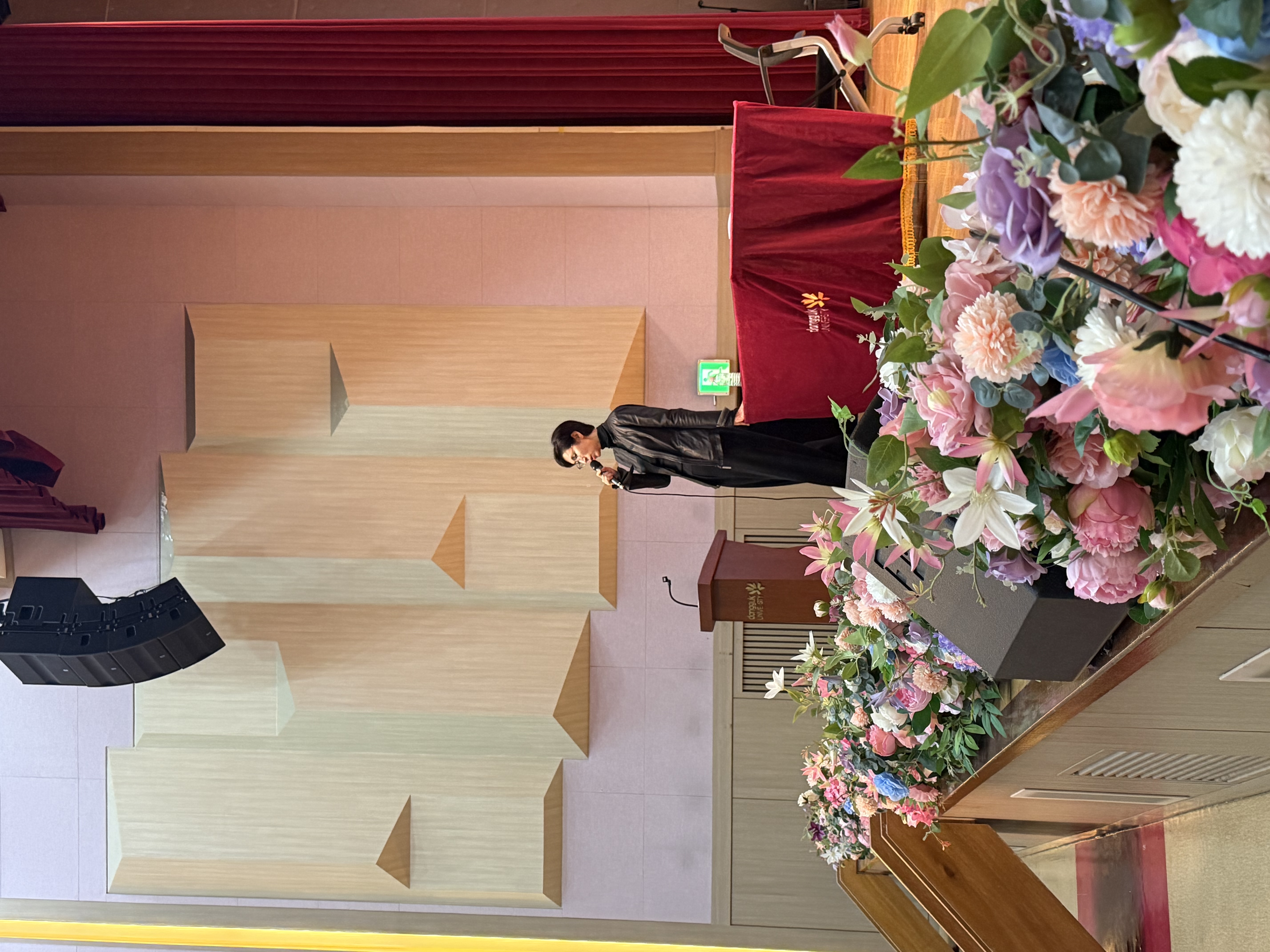
2026년 4월 28일, 동국대학교 남산홀에서 아트센터 나비의 노소영 관장님 강연이 진행되었다. 'Beyond Intelligence'라는 제목의 강연은 처음부터 내 예상을 비껴갔다. 인공지능과 예술의 만남으로 이어질 줄 알았던 강연은 오히려 인공지능의 철학적 뿌리, 즉 공리주의에서 출발했다. 비용을 최소화하고 이익을 최대화한다는 공리주의의 논리가 AI 알고리즘의 기반이 되었으나, 정작 현재의 AI는 공리주의의 절반, 즉 비용 최소화만을 구현하고 있을 뿐이라는 지적이었다. 사랑, 우정, 정의처럼 수치화되지 않는 가치들은 이 방정식에 처음부터 포함되어 있지 않다. "Brilliant할 수 있지만 Blind하다." 관장님의 이 한마디가 강연 내내 머릿속에서 지워지지 않았다.
회계학을 전공하는 나에게 이는 낯설지 않았다. 섬뜩할 만큼 익숙했다. 회계(Accounting)란 모든 경제적 사건을 측정 가능한 화폐 단위로 기록하는 학문이다. 기업의 한 해 기록이 손익계산서 위에 압축되고, 자산과 부채의 균형이 재무상태표 한 장에 담긴다. 그런데 관장님이 묘사한 AI의 구조, 즉 측정 가능한 데이터만을 다루고 패턴을 인식하며 오차를 줄여나가는 방식은 회계 실무의 상당 부분과 구조적으로 동일했다. 전표 분류, 계정 조정, 오류 검토. 회계학 교재의 목차를 AI가 학습할 수 있는 항목과 그렇지 않은 항목으로 나눈다면, 전자가 압도적으로 많을 것이다.
여기서 나는 더 근본적인 물음과 마주했다. 회계가 기업의 한 해를 기록한다고 한들 회계의 언어로 포착되지 않는 것들이 있다. 기업이 구성원을 대하는 방식, 지역사회에 끼치는 영향, 경영진의 판단이 얼마나 윤리적인가. 이것들은 재무제표의 어느 계정에도 잡히지 않는다. 관장님은 측정 불가능한 것은 방정식 안에 들어가지 않는다고 했는데, 나는 그 말이 회계의 오래된 한계를 동시에 가리키고 있다고 느꼈다. 훌륭한 회계사란 숫자를 정확히 계산하는 사람이 아니라, 그 숫자가 무엇을 드러내고 무엇을 감추는지 묻고 알아내야 하는 사람이어야 한다. 그 질문은 알고리즘이 아니라 사람만이 던질 수 있다.
관장님은 성리학의 지성 개념을 통해, 참된 앎이란 지식을 윤리적으로 실천하고 공동체 안에서 실현할 때 비로소 완성된다고 했다. 서양의 지능이 인간 외부에 존재하며 인간을 종속시키는 방향으로 발전한다면, 동양의 리(理)는 매일의 수행을 통해 내가 점점 가까이 다가가는 진리다. 이 대비는 회계사라는 직업에 대해서도 유효했다. 회계사의 역할을 숫자를 처리하는 기술자로만 정의한다면 그 자리는 AI에게 넘어간다. 그러나 재무 정보 뒤에 놓인 경영 판단을 읽고, 이해관계자에게 진실을 전달하며, 공공의 신뢰를 지키는 일, 즉 회계감사가 진실하고 공정한 표시를 목적으로 하는 이유를 체득하는 일은 전혀 다른 차원이다. 그것은 기술이 아니라 태도이며, 수행이다.
AI와 인간의 공존 방식을 묻자 관장님은 "문제를 발견하고 정의하는 것이 인간의 몫"이라고 답했다. AI가 아무리 정교해도, 어떤 문제를 풀어야 하는지는 사람이 결정해야 한다는 것이다. 그 말은 내가 앞으로 나아가야 할 방향을 가리키는 것 같았다. 숫자를 다루는 능력 이전에 왜 이 숫자가 중요한지, 이 숫자 이면에 어떤 사람들의 삶이 놓여 있는지를 묻는 감각. 그것이 AI가 대체할 수 없는, 그리고 내가 회계학을 통해 길러야 할 진짜 역량일 것이다.
강연이 마무리되고 관장님의 말씀을 다시 떠올려 보았다. 오늘의 강연 내용과 질의응답을 통해 관장님이 우리에게 해주고 싶었던 말은 불안에 쏠리고 유행에 쏠려 자기를 잃지 말라는 뜻으로 들렸다. 나는 CPA 합격증을 쥐고도 갈 곳을 찾지 못하는 선배들의 이야기를 들으며 '그래도 괜찮겠지'라고 되뇌던 나 자신을 다시 떠올렸다. 어쩌면 나는 불안을 잠재우기 위한 자격증이라는 숫자를 좇으면서도, 정작 회계라는 언어로 무엇을 말하고 싶은지는 한 번도 제대로 묻지 않았던 것이 아닐까.
재무제표는 기업의 과거를 기록하지만, 미래의 가치는 그 어느 계정에도 쓰이지 않는다. 참나를 찾는 일도 그와 비슷하다고 생각한다. 지금 내 안에 무엇이 쌓이고 있는지, 나는 어디를 향하고 있는지, 그것은 어떤 점수나 자격으로도 표시되지 않는다. 오늘 강연은 그 보이지 않는 장부를 들여다보는 첫 질문을 내게 던져주었다. 어느 한쪽으로 쏠리지 않고, 측정되지 않는 것의 가치를 믿으며, 나만의 계정을 하나씩 채워나가는 것. 그것이 오늘의 강연에서, 그리고 이 시대에서 내가 찾아야 할 참된 나일 것이다.
The Value of What Cannot Be Measured
In the Age of AI, Searching for the Self Not Yet Recorded in the Ledger
It was a meal with my professor after the major course had ended last winter. He mentioned that seniors who had passed the Certified Public Accountant (CPA) examination were holding their certificates without being able to join accounting firms. I was vaguely aware of this, so I wasn't particularly surprised. This spring, many media outlets reported that AI was taking over the work of accountants. "Accountants, Tax Accountants, Lawyers in Trouble… To Be Replaced by This Within Five Years"; "Even Professionals Tremble at the AI Invasion… Trainee Accountants and Lawyers with Nowhere to Go." Looking at headlines like these, even I—who had been trying to console myself with "it'll still be okay"—eventually became overcome with anxiety.
On April 28, 2026, a lecture by Director Noh So-young of Art Center Nabi was held at Namsan Hall, Dongguk University. The lecture, titled "Beyond Intelligence," diverged from my expectations from the very beginning. What I had assumed would be a meeting between artificial intelligence and art instead began with the philosophical roots of AI—namely, utilitarianism. The director pointed out that while the utilitarian logic of minimizing cost and maximizing benefit became the foundation of AI algorithms, today's AI in fact implements only half of utilitarianism: cost minimization alone. Values that cannot be quantified—love, friendship, justice—were never included in the equation to begin with. "It can be Brilliant, but it is Blind." This one remark of hers refused to leave my head throughout the entire lecture.
For someone majoring in accounting, this was not unfamiliar. It was chillingly familiar. Accounting is the discipline of recording every economic event in measurable monetary units. A company's entire year is compressed onto an income statement; the balance of assets and liabilities is contained on a single balance sheet. And yet, the structure of AI the director described—dealing only with measurable data, recognizing patterns, and reducing errors—was structurally identical to a substantial portion of accounting practice. Voucher classification, account reconciliation, error review. If one were to divide the table of contents of an accounting textbook into items AI can learn and items it cannot, the former would overwhelmingly outnumber the latter.
Here I faced a more fundamental question. Even if accounting records a company's year, there are things the language of accounting fails to capture. How a company treats its members, the impact it has on its local community, how ethical the judgment of its management is. None of these appear in any account on the financial statements. The director said that what cannot be measured does not enter the equation, and I felt that her words simultaneously pointed to an old limitation of accounting itself. A great accountant should not be someone who calculates numbers accurately, but someone who must ask and uncover what those numbers reveal and what they conceal. That question can only be posed by a human, not by an algorithm.
Through the Neo-Confucian concept of jiseong (知性), the director argued that true knowing is completed only when knowledge is ethically practiced and realized within a community. Whereas Western intelligence exists outside the human and develops in a direction that subjugates the human, the Eastern li (理) is a truth that I draw nearer to through daily cultivation. This contrast held just as true for the profession of accountant. If we define the accountant's role merely as that of a technician processing numbers, that position will be handed over to AI. But reading the managerial judgment behind financial information, conveying the truth to stakeholders, safeguarding public trust—that is, embodying the very reason auditing exists to aim for a "true and fair presentation"—belongs to an entirely different dimension. It is not technique but attitude; it is suhaeng, a practice.
When asked about the mode of coexistence between AI and humans, the director answered, "Discovering and defining problems is the human's share." No matter how sophisticated AI becomes, it is the human who must decide which problem to solve. Her words seemed to point toward the direction I must walk going forward. Before the ability to handle numbers, the sensibility to ask why these numbers matter, and whose lives lie behind them. That, surely, is the true competence AI cannot replace—and the one I must cultivate through accounting.
After the lecture ended, I went over the director's words once more. What she seemed to want to tell us, through both the talk and the Q&A, was this: do not lose yourself by being swept along by anxiety or by trends. Listening to stories of seniors who could find no place even while clutching their CPA certificates, I recalled once again my own murmured "it'll still be okay." Perhaps, while chasing the number called a certificate in order to quiet my anxiety, I had never once properly asked what I actually wanted to say in the language of accounting.
Financial statements record a company's past, but future value is written in no account. Finding the true self, I think, is much the same. What is accumulating inside me now, where I am heading—none of this is marked by any score or qualification. Today's lecture posed to me the first question of peering into that invisible ledger. Not tilting to one side, trusting the value of what cannot be measured, filling in my own accounts one by one. That, I believe, is the true self I must find—both through today's lecture and within this era.
无法衡量之物的价值
在AI时代,寻找尚未登入账簿的自我
去年冬天专业课程结业之后,是与教授共进餐食的场合。教授提到,通过了注册会计师考试(CPA)的学长学姐们,手握合格证书却无法进入会计师事务所。这件事我早有耳闻,因此并未感到太过惊讶。今年春天,许多媒体报道了AI正在取代会计师工作的消息。"会计师、税务师、律师惨了……据说五年内将被这家伙取代","专门职业也在AI入侵下瑟瑟发抖……无处可去的实习会计师与律师。"看着这些标题,原本以"应该还好吧"勉强安慰自己的我,最终也被不安所笼罩。
2026年4月28日,东国大学南山厅举行了Art Center Nabi馆长卢素英的演讲。题为"Beyond Intelligence"的演讲从一开始就出乎我的意料。原以为会是人工智能与艺术相遇的内容,演讲却从人工智能的哲学根源——功利主义出发。她指出,"成本最小化、利益最大化"的功利主义逻辑成为了AI算法的基础,然而当下的AI实际上只实现了功利主义的一半,即仅仅做到了成本的最小化。爱、友情、正义这类无法被数值化的价值,从一开始就不在这个方程式之内。"It can be Brilliant, but it is Blind."馆长的这一句话,在整场演讲中始终萦绕在我的脑海。
对于学习会计学的我而言,这并不陌生。甚至熟悉得令人毛骨悚然。会计学(Accounting)是将一切经济事件以可衡量的货币单位加以记录的学问。企业一年的轨迹被压缩在一张损益表上,资产与负债的平衡被收纳进一份资产负债表中。而馆长所描述的AI结构——只处理可衡量的数据、识别模式、减少误差——在结构上竟与会计实务的大部分内容如出一辙。凭证分类、账户调整、错误复核。若将会计学教材的目录划分为AI可学习的项目与不可学习的项目,前者将占据压倒性的多数。
在这里,我面对了一个更为根本的疑问。即便会计能记录企业的一年,也仍有许多事物是会计的语言所无法捕捉的。企业对待其成员的方式、对地方社会所产生的影响、经营层的判断在多大程度上合乎伦理。这些都不会被记入财务报表的任何一个科目。馆长说,无法衡量之物便不会进入方程式之中,而我感到这句话同时也指向了会计学一个由来已久的局限。优秀的会计师并非精准计算数字的人,而应是追问并洞察那些数字揭示了什么、又隐藏了什么的人。这一提问,唯有人能发出,算法无法做到。
馆长借由性理学中"知性"的概念阐述:真正的知,唯有在伦理实践之中、在共同体内得以实现之时,方才得以圆满。西方的智能存在于人之外,并朝着令人从属于它的方向发展;而东方的"理",则是我通过每日的修行而日渐趋近的真理。这一对比,对于会计师这一职业同样成立。若仅将会计师的角色定义为处理数字的技术者,那么这个位置便会让渡给AI。然而,读懂财务信息背后的经营判断、向利益相关者传达真实、守护公众的信任——也就是体悟会计审计为何以"真实而公正的呈现"为目的——这是截然不同的维度。它不是技术,而是态度,是修行。
当被问及AI与人类共存的方式时,馆长回答道:"发现并定义问题是人的本分。"AI再精妙,也需由人来决定该解决何种问题。这句话仿佛在为我指示今后应当前行的方向。在掌握处理数字的能力之前,先要具备追问"为何这个数字重要、这个数字背后承载着哪些人的人生"的感知力。那才是AI无法取代的、也是我必须通过会计学加以培养的真正能力。
演讲结束后,我再次回想馆长的话。透过今天的演讲内容与问答,馆长想要告诉我们的,似乎是这样一句话:不要被不安卷走,不要被潮流卷走,不要因此丢失了自己。我又一次想起那个听着"手握CPA合格证却无处可去"的学长学姐们的故事、却仍喃喃自语"应该还好吧"的自己。或许,我一边追逐着"资格证"这个用以平息不安的数字,却从未真正认真追问过:我究竟想用会计这门语言述说什么。
财务报表记录企业的过去,但未来的价值不会被书写在任何一个科目之中。寻找真我,我想,也是与此相似的事。此刻我的内在正在积累什么,我正朝向何方——这一切都无法以任何分数或资格来标示。今天的演讲为我抛出了凝视那本看不见的账簿的第一个问题。不向任何一方倾倒,相信无法被衡量之物的价值,一笔一笔填写属于我自己的科目。这,便是我从今天的演讲中、也是在这个时代里所应寻得的真我。