
멘토 특강 감상문
2주차 최재철 이사장님 특강 우수감상문 선정 (한국어, 중국어, 영어 번역)
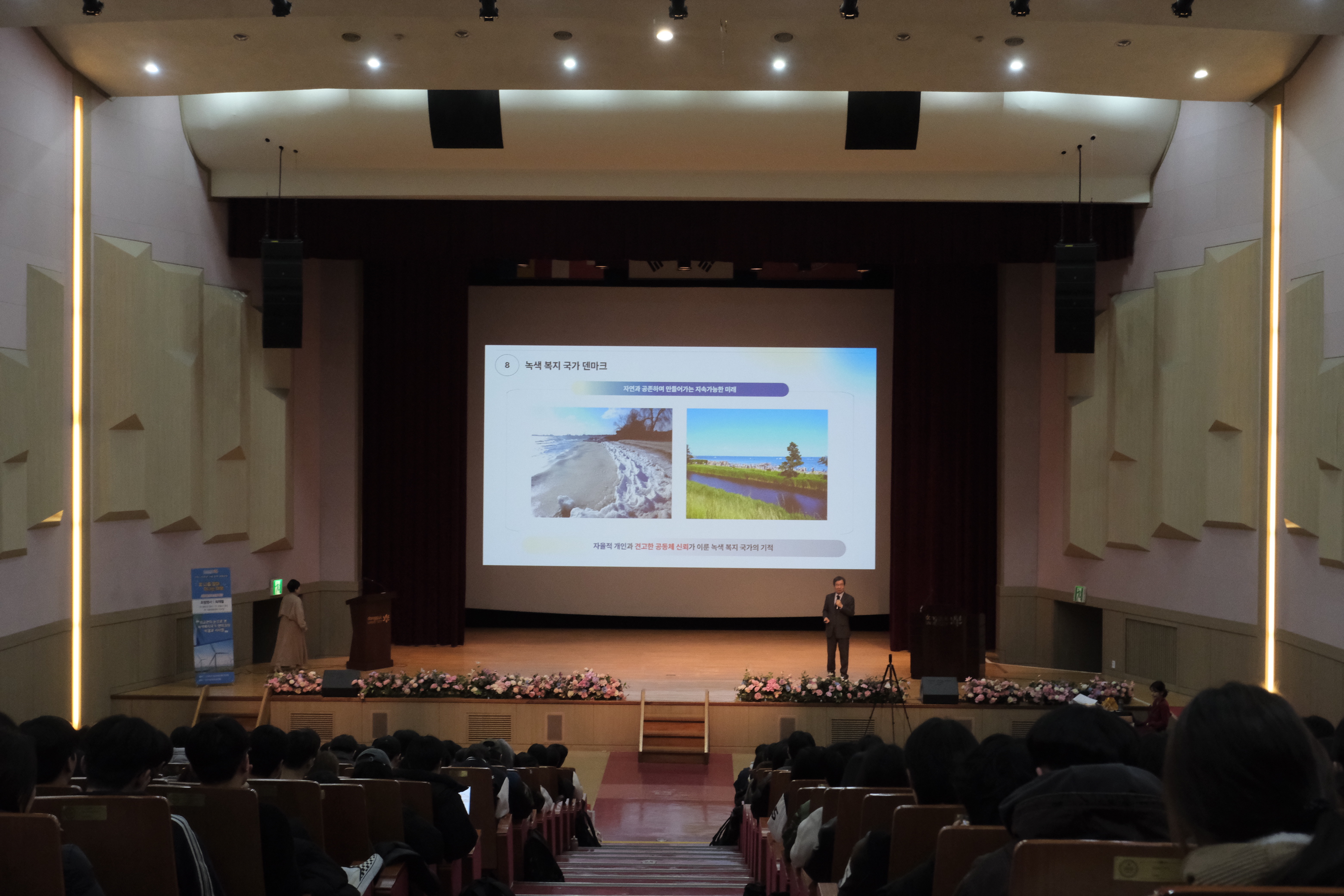
플레이어, 휘게, 그리고 지속 가능한 나
컴퓨터공학과 김민수
2026년 3월 10일, 우리 동국대학교 교정에는 봄기운이 완연했지만, 중강당 안에서 들려온 최재철 기후변화센터 이사장님의 목소리는 현재 인류가 마주한 현실이 결코 따뜻하지만은 않 음을 경고하고 있었습니다. 참 나를 찾아 떠나는 여행의 두 번째 정거장에서 만난 이번 강연 은, 전 덴마크 대사라는 화려한 경력을 뒤로하고 기후 위기라는 인류 공통의 난제를 해결하기 위해 헌신하시는 멘토님의 진정성을 느낄 수 있는 시간이었습니다. 강연의 서두에서 언급된 불확실성(Uncertainty)이라는 단어는 컴퓨터공학을 전공하는 저에게 매우 익숙하면서도 두려운 단어였습니다. 프로그래밍에서 예측 불가능한 변수는 시스템의 붕 괴를 의미하기 때문입니다. 하지만 이사장님께서는 이 불확실성을 단순히 공포의 대상으로 두 지 말고, 우리가 어떤 플레이어가 되느냐에 따라 새로운 기회의 판으로 바뀔 수 있음을 역설 하셨습니다. 특히 기후 위기가 유행이 아닌 생존의 문제라는 점은, 그동안 모니터 앞의 텍스 트로만 기후 변화를 접해온 저의 안일함을 깨우는 강력한 경종이 되었습니다.
사실 부끄러운 고백이지만, 이번 강연을 듣기 전까지 저는 환경 문제에 대해 매우 냉소적인 태도를 지닌 철저한 관객이었습니다. 뉴스에서 빙하가 녹고 북극곰이 살 곳을 잃는다는 소식 을 접할 때마다 마음 한구석이 무거워지기도 했지만, 이내 “나 하나가 분리수거를 잘한다고, 텀블러를 쓴다고 해서 거대한 지구가 바뀔까?”라는 회의감이 저를 지배하곤 했습니다. 억 단 위의 인구가 살아가는 이 행성에서 한 명의 학부생이 기울이는 노력이란 바다에 떨어지는 물 방울 하나만큼이나 무력해 보였기 때문입니다. 이러한 생각은 저를 환경 문제로부터 도망치게 만들었습니다. 굳이 관련 기사를 찾아보지 않 았고, 에너지 절약이나 탄소 중립 같은 단어들은 제 전공인 코딩이나 관심사인 보디빌딩보다 훨씬 우선순위가 낮은 일들로 치부되었습니다. 하지만 이사장님의 강연은 저의 이러한 효율성 중심의 사고방식에 커다란 균열을 냈습니다. 멘토님께서는 덴마크가 녹색 국가로 거듭날 수 있었던 것은 한 명의 영웅이 아닌, 나 하나라도라는 마음을 가진 수많은 시민의 연대와 신뢰 가 있었기 때문임을 보여주셨습니다. “관객은 세상을 바꿀 수 없다”라는 말씀은 마치 저의 비 겁한 냉소주의를 꿰뚫어 보시는 듯했습니다.
강연 중 제 마음을 가장 깊게 파고든 단어는 단연 덴마크의 휘게(Hygge)였습니다. 이사장님 께서는 기후 위기라는 전 지구적인 불안 속에서도 덴마크가 세계 행복도 1위를 유지할 수 있 는 비결로 이 휘게 문화를 꼽으셨습니다. 강연을 통해 배운 휘게는 단순히 편안함이라는 사전 적 의미를 넘어선 것이었습니다. 그것은 촛불 하나를 켜고, 사랑하는 사람과 따뜻한 차를 마 시며, 일상의 소박한 즐거움에 감사하는 마음가짐이자, 자극적이고 과잉된 소비가 아닌 충분 함 속에서 평온을 찾는 철학이었습니다. 저는 이 휘게라는 개념을 접하며 큰 충격을 받았습니다. 그동안 저는 컴퓨터공학도이자 보디 빌딩을 즐기는 학생으로서, 항상 더 높은 성능, 더 큰 근육, 더 빠른 결과만을 추구해 왔습니 다. 제 전공 분야인 프로그래밍은 끊임없이 최적화를 요구하며, 헬스장에서의 시간은 어제보 다 더 무거운 무게를 들어 올려야만 성취감을 느낄 수 있는 치열한 전장이었습니다. 하지만 휘게는 저에게 묻고 있었습니다. “과연 너는 그 치열함 속에서 진짜 행복을 느끼고 있니?”라 고 말입니다. 덴마크인들이 자전거를 타고 출퇴근하며 바람을 느끼고, 소박한 식사를 즐기는 모습은 저에게 진정한 참 나를 찾는 방법이 무엇인지 보여주는 듯했습니다.
이러한 깨달음은 제가 꿈꾸는 미래인 게임 산업에 대한 비전으로 이어졌습니다. 게임은 흔히 강렬한 시각적 자극과 경쟁, 도파민의 분출을 목적으로 설계되곤 합니다. 저 역시 지금까지는 플레이어의 아드레날린을 자극하는 화려한 액션 게임 개발에만 관심을 두었습니다. 하지만 최 재철 이사장님이 설명해 주신 휘게의 가치를 게임에 녹여낼 수 있다면 어떨까 하는 새로운 상 상을 하게 되었습니다. 사용자에게 과도한 경쟁과 과금을 유도하는 스트레스가 아닌, 게임 안에서나마 평온한 숲을 걷고 소박한 마을을 가꾸며 정서적 안식을 얻는 디지털 휘게를 구현하는 개발자가 되고 싶습 니다. 마치 덴마크가 기후 위기 속에서도 공동체의 온기로 불안을 이겨내듯, 제가 만들 게임 이 현대인들에게 일상의 작은 촛불이 되어줄 수 있다면 그것이야말로 공학도로서 제가 실현할 수 있는 최고의 정의로운 전환이 아닐까 생각합니다. 게임 개발의 프로세스 자체도 환경에 미 치는 영향을 최소화하는 지속 가능한 방식을 고민하며, 기술의 진보가 지구의 고통을 덜어주 는 방향으로 나아가도록 코딩하고 싶습니다.
강연 이후, 저는 일상에서 작은 변화를 시작하기로 했습니다. 헬스장에서 무거운 바벨을 드 는 시간에도 단순히 근육의 크기를 키우는 것에만 집착하는 것이 아니라, 내 몸이 자연과 연 결되어 있음을 느끼며 호흡에 집중하는 시간을 가집니다. 또한 밤샘 코딩으로 지친 새벽, 코 드 한 줄을 더 짜기보다 잠시 창밖의 밤하늘을 보며 나 자신에게 휴식을 선물하는 나만의 휘 게를 찾아보고 있습니다. 무엇보다 중요한 변화는 이제 기후 환경 문제를 남의 일이 아닌 나의 시스템 문제로 인식하 기 시작했다는 점입니다. 나 한 명의 실천이 전체 탄소 배출량에 미치는 영향은 수치상으로 미미할지 모릅니다. 하지만 멘토님께서 강조하신 대로, 제가 플레이어로서 경기장에 들어서는 순간, 주변의 동료 개발자들과 친구들에게도 그 영향이 전달될 것임을 믿습니다. 한 줄의 코 드가 모여 거대한 운영체제를 만들듯, 한 명의 작은 실천이 모여 녹색 복지 국가의 토대가 된 다는 사실을 이제는 의심하지 않습니다. 최재철 이사장님께서는 강연 말미에 “세상이 돌아가는 것을 비판만 하는 관객이 되지 말고, 정해진 판을 뒤흔드는 플레이어가 되어라”라는 강력한 메시지를 던져 주셨습니다. 이 말씀은 참 나를 찾아가는 저의 여행에 있어 가장 큰 이정표가 되었습니다. 기후 위기라는 거대한 파도는 제가 통제할 수 없는 변수일지도 모릅니다. 하지만 그 파도를 타고 나아갈 배의 방향타는 저의 손에 쥐어져 있습니다.
저는 이제 막연한 두려움을 가진 구 경꾼의 자리에서 내려와, 제 전공 지식과 휘게라는 따뜻한 가치를 결합하여 더 나은 세상을 설계하는 플레이어가 되고자 합니다. 이번 특강은 저에게 단순한 지식 전달 이상의 경험이었습니다. 참 나를 찾는다는 것은 나만 의 성공을 좇는 것이 아니라, 내가 사랑하는 사람들과 이 푸른 지구 위에서 지속 가능한 행 복, 즉 휘게를 나누는 과정임을 배웠습니다. 강연에서 얻은 이 따뜻한 온기를 잊지 않고, 더 좋은 동국과 더 나은 미래를 위해 제가 할 수 있는 모든 코드를 진심을 다해 적어 내려가겠습 니다. 불확실한 미래를 향해 첫발을 내딛는 지금, 제 마음속에는 이미 덴마크의 따뜻한 휘게 의 촛불이 켜졌습니다.
玩家,Hygge,以及可持续的自我
2026年3月10日,我们东国大学的校园已是春意盎然。然而,从校内大礼堂传来的气候变化中心理事长崔在哲先生的声音,却提醒着我们:人类当下所面对的现实,远没有这般温暖。在《寻找自我的旅行Ⅱ》的第二站中聆听这场讲座,我深切感受到这位导师的真诚——他不再拘泥于曾任驻丹麦大使的光鲜经历,而是投身于解决气候危机这一全人类共同难题的事业之中。
讲座伊始提到的“不确定性(Uncertainty)”,对主修计算机工程的我来说,是既熟悉又令人畏惧的概念。在编程中,不可预测的变量往往意味着系统可能走向崩溃。然而,理事长却指出,我们不应将不确定性仅仅视为恐惧的来源;取而代之,它完全可能随着我们选择成为什么样的“玩家(Player)”,转化为孕育新机遇的广阔舞台。尤其是他所强调的——“气候危机不是一种流行,而是关乎生存的问题”,如同一记警钟,彻底打破了我一直以来隔着屏幕阅读相关信息所形成的安逸与迟钝。
说来惭愧,在聆听这场讲座之前,我对环境问题始终抱持着一种冷眼旁观的态度。每当在新闻中看到冰川融化、北极熊失去栖息地的画面,心中虽会泛起一丝沉重,但很快便被这样的念头所取代:“即便我认真做好垃圾分类、坚持使用随行杯,又真的能够改变这个庞大的地球吗?”在这个拥有数十亿人口的星球上,一名普通本科生的努力,仿佛不过是落入大海的一滴水,微不足道。
正是这样的想法,让我不断逃避环境议题。我不再主动关注相关新闻,“节能”与“碳中和”这些词语,在我心中远远排在专业学习与兴趣爱好之后。然而,这场讲座却在我一贯以“效率至上”为导向的思维方式中撕开了一道裂缝。理事长用丹麦的案例告诉我们:一个国家之所以能够走向绿色转型,并非依靠某一位英雄,而是源于无数个怀抱“哪怕从我做起”的普通人之间的信任与连结。他那句“旁观者无法改变世界”,仿佛直指我内心深处那份逃避与冷漠。
整场座中,最深深触动我的,是“丹麦的Hygge”。理事长指出,正是在这种文化的支撑下,丹麦才能在全球性不安候焦虑中,依然长期位居世界幸福指数前列。我逐渐理解到,Hygge远不只是“舒适”这一简单的词义。它是一种点亮烛光、与所爱之人共饮热茶、在日常细微之处感受温暖与感恩的生活态度;也是一种拒绝过度消费、在“恰到好处”中体会宁静与满足的生活哲学。
这一理念给我带来了不小的冲击。一直以来,作为一名计算机工程专业的学生,同时也是健美爱好者,我始终在追求更高的性能、更快的结果以及更强的身体表现。编程意味着不断优化,而健身则意味着不断突破昨日的极限。然而,Hygge却仿佛在向我发问:“在这份不断追逐之中,你真的感到幸福吗?”丹麦人骑车通勤、感受微风、享受简单饮食的生活图景,让我第一次认真思考:或许,真正的“自我”,并不在无止境的竞争之中。
这样的反思,也逐渐延伸到了我对未来的想象——尤其是我所向往的游戏产业。一直以来,游戏往往以强烈的视觉刺激与竞争机制为核心,旨在不断激发玩家的兴奋与快感。我过去同样沉迷于构想那些能够带来强烈感官冲击的动作游戏。然而现在,我开始思考:如果能够将Hygge的价值融入游戏,会不会创造出另一种可能?
我希望成为一名能够构建“数字Hygge(Digital Hygge)”的开发者——不是通过竞争与付费机制制造压力,而是让玩家在虚拟世界中漫步宁静的森林、经营朴素的村庄,在其中获得情绪上的安放与内心的平静。正如丹麦在气候危机中以社区的温度抵御不安,如果我所开发的游戏,能够成为现代人生活中一束微小却真实的光,那或许正是我作为一名工程学子所能实现的“公平转型(Just Transition)”。与此同时,我也希望在开发过程中探索更具可持续性的方式,让技术的发展尽可能减少对环境的负担。
讲座之后,我开始尝试在日常生活中做出一些细微的改变。在健身房举起杠铃时,我不再只关注肌肉的增长,而是开始留意呼吸与身体的节奏,感受自己与自然之间的联系。在那些因熬夜编程而疲惫的清晨,比起多写一行代码,我更愿意停下来看看窗外的夜色,给自己留出片刻宁静,去体会属于自己的Hygge时刻。
更重要的是,我开始将气候问题视为“属于我的系统问题”,而不再是遥远的他者议题。或许一个人的行动,在整体碳排放数据中微不足道,但正如理事长所说,当我选择成为一名“玩家”并踏入这个场域时,这种改变便会在我身边的人之间悄然扩散。正如一行行代码汇聚成庞大的操作系统,无数个体的微小行动,终将构筑起绿色社会的基础。
在讲座的最后,崔在哲理事长留下了一句让我印象深刻的话:“不要只做批判世界运转的旁观者,要成为能够撼动既有格局的玩家。”这句话,也成为我在《寻找自我的旅行》中最重要的路标。
气候危机或许如同巨浪,是我无法完全掌控的变量;但决定航向的舵,却始终握在自己手中。如今,我愿意走下旁观者的席位,将专业知识与Hygge这一温暖的价值结合起来,去尝试设计一个更好的世界。
这场讲座,于我而言,早已超越了知识的传递。它让我明白,所谓“寻找自我”,并非只是追求个人的成功,而是学会与所爱之人一道,在这颗蓝色星球上共享一种可持续的幸福——那便是Hygge。我会记住这份温度,并将其融入未来的每一行代码之中。此刻,当我迈向充满不确定性的未来时,心中已然点亮了一盏名为Hygge的温暖烛光。
Player, Hygge, and a Sustainable Self
On March 10, 2026, the signs of spring were fully present across the campus of Dongguk University, yet the voice of Chairman Choi Jae-cheol of the Climate Change Center, heard inside the main auditorium, warned that the reality humanity now faces is by no means a warm one. This lecture, which I encountered at the second stop of Journey to Find My True Self, allowed me to feel the sincerity of a mentor who, despite his distinguished career as former ambassador to Denmark, has devoted himself to solving the shared human challenge of the climate crisis.
At the beginning of the lecture, the word “uncertainty” was mentioned, and for me, as a computer engineering student, it was both a familiar and a frightening term. In programming, an unpredictable variable can mean the collapse of an entire system. However, Chairman Choi emphasized that uncertainty should not simply be regarded as an object of fear; depending on what kind of player we choose to become, it can instead be transformed into a new field of opportunity. In particular, the idea that the climate crisis is not a passing trend but a matter of survival served as a powerful wake-up call, shattering the complacency with which I had previously encountered climate change only as text on a monitor.
To be honest, before attending this lecture, I had been a thorough spectator with a deeply cynical attitude toward environmental issues. Whenever I heard news about glaciers melting or polar bears losing their habitat, a part of my heart would feel heavy for a moment, but I would soon be overtaken by skepticism: Would the enormous Earth really change just because one person recycles properly or uses a tumbler? On a planet inhabited by billions of people, the effort of a single undergraduate student seemed as powerless as a single drop of water falling into the sea.
These thoughts made me distance myself from environmental issues. I did not bother to seek out related articles, and words like energy conservation or carbon neutrality were always ranked far below my major interest in coding or my personal interest in bodybuilding. But Chairman Choi’s lecture created a major crack in this efficiency-centered way of thinking. He showed that Denmark was able to become a green nation not because of a single hero, but because of the solidarity and trust of countless citizens who believed, “Even if it’s just me, I will act.” His remark that “spectators cannot change the world” felt as though it pierced straight through my cowardly cynicism.
Among everything in the lecture, the word that most deeply penetrated my heart was undoubtedly Hygge, the Danish concept. Chairman Choi pointed to this culture of Hygge as the secret behind Denmark’s ability to remain the happiest country in the world despite the global anxiety caused by the climate crisis. Through the lecture, I learned that Hygge meant far more than the dictionary definition of mere comfort. It was a mindset of lighting a single candle, drinking warm tea with loved ones, and feeling gratitude for the simple joys of everyday life. It was a philosophy of finding peace in sufficiency rather than in stimulation, excess, or overconsumption.
Encountering the concept of Hygge was deeply shocking to me. As a computer engineering student and someone who enjoys bodybuilding, I had always pursued higher performance, bigger muscles, and faster results. Programming, my field of study, constantly demands optimization, and time spent in the gym had felt like a fierce battlefield where I could only feel accomplished if I lifted heavier weights than the day before. But Hygge seemed to ask me, “In the midst of all that intensity, are you truly happy?” The image of Danish people riding bicycles to and from work, feeling the breeze, and enjoying simple meals seemed to show me what it really means to find one’s true self.
This realization led me to reflect on my vision for the future: the game industry. Games are often designed to provide intense visual stimulation, competition, and bursts of dopamine. Up until now, I too had only been interested in developing flashy action games that stimulate players’ adrenaline. But after hearing Chairman Choi explain the value of Hygge, I began to imagine something new: what if the spirit of Hygge could be embedded in games?
I want to become a developer who creates a kind of digital Hygge—not stress that encourages excessive competition and in-game spending, but experiences in which users can walk through peaceful forests, cultivate small villages, and find emotional comfort, at least within the game world. Just as Denmark overcomes anxiety through the warmth of community even amid the climate crisis, I believe that if the games I create could become small candles in people’s daily lives, then that itself might be the greatest “just transition” I could realize as an engineer. I also want to think carefully about how to make the process of game development itself more sustainable, minimizing its environmental impact, and to code in ways that ensure technological progress moves in a direction that alleviates the suffering of the Earth.
After the lecture, I decided to begin making small changes in my daily life. Even during my time in the gym, lifting heavy barbells, I now try not to obsess only over increasing muscle size, but to focus on my breathing and feel that my body is connected to nature. During the exhausted early hours after coding through the night, instead of forcing myself to write one more line of code, I try to look out at the night sky and give myself rest—searching for my own form of Hygge.
Most importantly, I have begun to recognize climate and environmental issues not as someone else’s problem, but as a systems problem that is also mine. Numerically speaking, the impact of one individual’s actions on total carbon emissions may seem insignificant. But as Chairman Choi emphasized, the moment I step onto the field as a player, I believe that influence will spread to the fellow developers and friends around me as well. Just as a single line of code joins others to build a massive operating system, small actions by individuals come together to form the foundation of a green welfare state. I no longer doubt that truth.
Toward the end of the lecture, Chairman Choi delivered a powerful message: “Do not remain a spectator who only criticizes the way the world works; become a player who shakes up the board that has been laid out before you.” Those words became the greatest signpost in my journey to find my true self.
The enormous wave of the climate crisis may be a variable beyond my control. But the rudder that steers the boat through those waves is still in my hands. I now want to step down from the place of a fearful onlooker and become a player who designs a better world by combining my professional knowledge with the warm values of Hygge.
This special lecture was more than a simple transfer of knowledge. It taught me that finding one’s true self is not about pursuing only one’s own success, but about sharing sustainable happiness—Hygge—with the people one loves on this blue planet. I will not forget the warmth I gained from this lecture, and for a better Dongguk University and a better future, I will write every line of code I can with sincerity. As I now take my first steps toward an uncertain future, the warm candle of Danish Hygge is already lit within my heart.